(330) 876-1228
8507 Main StreetKinsman, OH 44428
(330) 876-1229

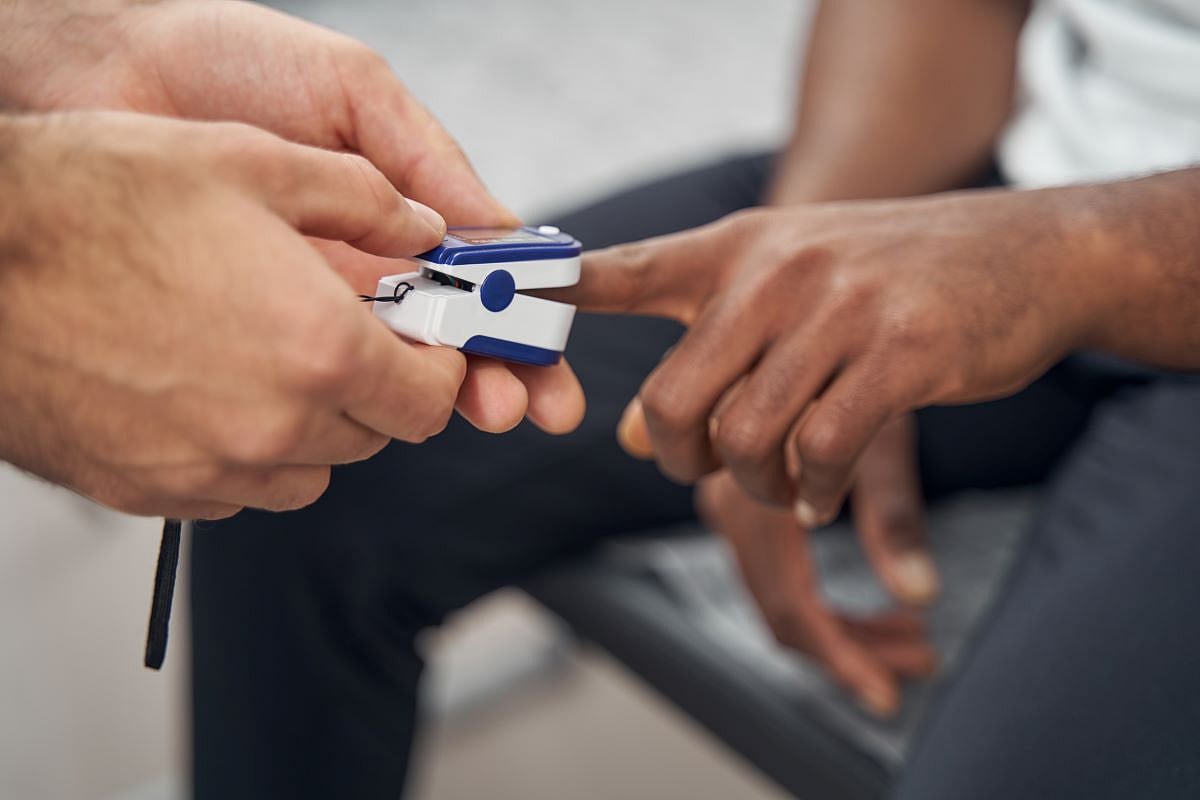
Most everyone’s seen one in a doctor’s office or hospital room -- the finger clip device that reads a person’s pulse and blood oxygen levels.
But new research shows these ubiquitous devices appear to give misleading readings for people with darker skin tones, potentially affecting their care.
Pulse oximeters give higher readings for patients with darker skin, meaning that low blood oxygen levels might be missed, according to findings published Jan. 14 in The BMJ.
“The five pulse oximeters assessed all gave higher (blood oxygen) readings for patients with darker skin tones than for patients with lighter skin tones,” concluded the research team led by Daniel Martin, a professor of perioperative and intensive care medicine at the University of Plymouth in the U.K.
These inaccurate readings “can meaningfully impact how clinicians care for patients with darker skin tones,” said Dr. Thomas Valley, a pulmonologist and critical care specialist at the University of Colorado who co-wrote an editorial accompanying the new study.
“Clinicians depend on accurate oxygen measurements to make important decisions on medical care,” he said in an email interview.
The consequences could be serious.
“Emergency medical technicians might not bring individuals to the hospital if a pulse oximeter provides a falsely normal reading, emergency department physicians might not admit a patient to the hospital with a normal pulse oximeter value, ICU physicians would not give a patient with COVID-19 life-saving medications like steroids if a patient is not receiving oxygen because of falsely normal readings from pulse oximeters,” Valley noted.
Pulse oximeters use light to measure how much oxygen is in a person’s blood.
For most people, a normal pulse oximeter reading is between 95% and 100%, researchers said in background notes. Readings below 90% to 92% indicate low blood oxygen levels that require medical attention.
Pulse oximeters became a crucial diagnostic tool during the COVID-19 pandemic, as lungs infected by the virus robbed people of oxygen. Some with low blood oxygen levels required mechanical ventilation to keep them alive.
For the new study, researchers tested the accuracy of five different fingertip pulse oximeters that were routinely provided by the U.K.’s National Health Service (NHS) for use at home as part of the government’s COVID response.
The research team evaluated data from more than 900 critically ill adults in 24 NHS intensive care units in England between June 2022 and August 2024.
Each patient’s skin tone was measured using a spectrophotometer -- a type of camera that measures color.
The researcher then compared pulse oximeter readings to those provided by a “gold standard” method of reading blood oxygen levels called arterial blood gas measurement.
More than 11,000 measurements were analyzed, looking at two thresholds -- a 94% or lower reading at which someone should seek medical help or a 92% or lower reading that should send a person to the ER.
All five pulse oximeters returned higher blood oxygen levels for patients with darker skin tones, on average as much as 1.5 percentage points off the mark.
Oxygen level errors increased as people’s skin grew darker, with the devices missing more low oxygen readings, researchers found.
They suggested that doctors not rely on pulse oximeter readings alone when caring for darker-skinned patients, but instead put these readings in context with other signs and symptoms.
In the linked editorial, Valley and colleagues agreed that for the time being, doctors will have to do their best, while understanding the devices’ flaws.
“The goal is not to abandon pulse oximetry but to understand its limits and make it equitable, ensuring that the technology designed to measure oxygen does not itself perpetuate inequalities in those who receive it,” the editorial said.
These findings could in particular throw a kink into efforts to extend at-home telemedicine to everyone, Valley said.
“Pulse oximeters are particularly valuable for monitoring care of patients remotely or at home,” he said. “For example, during the COVID-19 pandemic, clinicians often recommended that individuals purchase pulse oximeters to monitor oxygen levels at home when sick.”
But, Valley also offered a caution.
"If these pulse oximeters are inaccurate (and particularly when pulse oximeters overestimate oxygen levels – that is, providing falsely reassuring values when in fact a person might have dangerously low oxygen levels), then individuals may be harmed by not receiving the medical care that they need because of these faulty pulse oximeters,” he said.
More information
The University of Rochester Medical Center has more on pulse oximetry.
SOURCES: The BMJ, news release, Jan. 14, 2026; Email interview with Thomas Valley
