(330) 876-1228
8507 Main StreetKinsman, OH 44428
(330) 876-1229

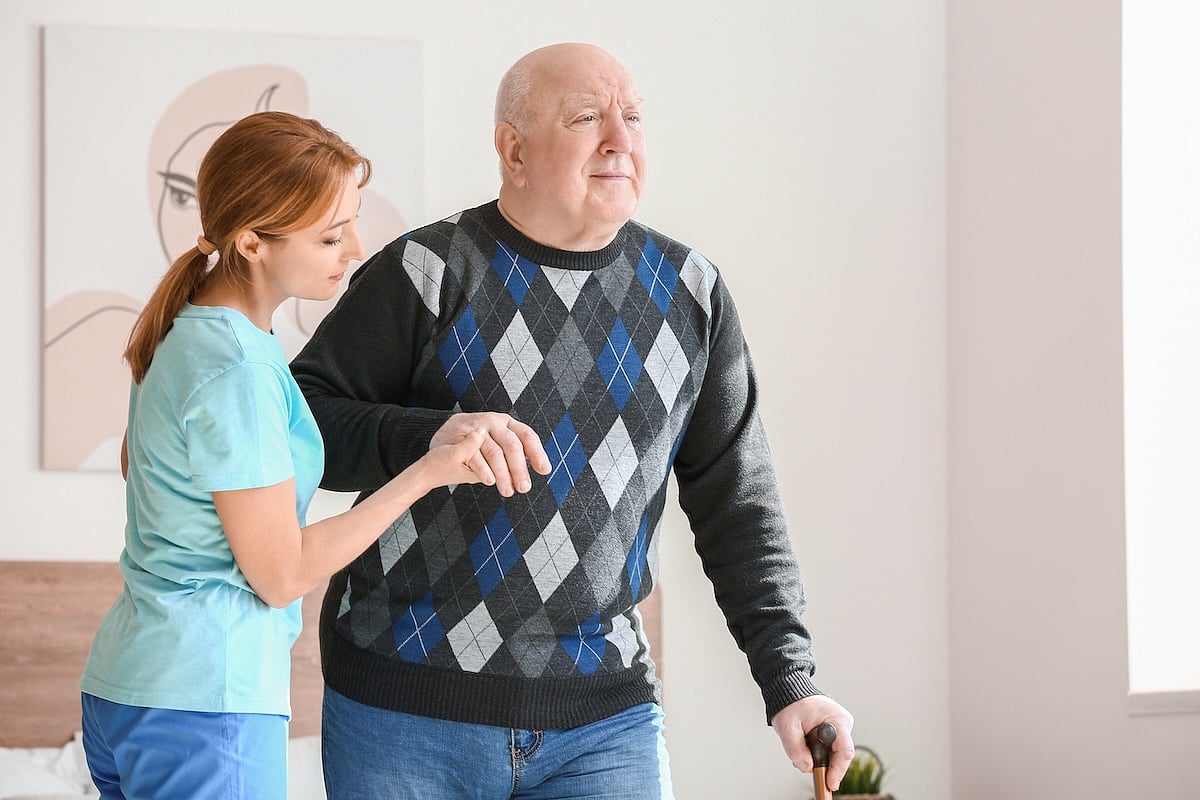
A new advance might help doctors improve movement in people with Parkinson’s disease by tracking their gait-related brain waves in real time.
An experimental brain implant can capture the signals of movement-related brain regions while Parkinson’s patients perform daily activities like walking to the kitchen or strolling through a park, researchers reported Feb. 13 in the journal Science Advances.
What’s more, researchers have figured out how to read those brain recordings, allowing a deeper understanding of the gait problems associated with Parkinson’s, researchers said.
Based on those readings, the implants could potentially be programmed to send electrical stimulation that matches what a Parkinson’s patient is doing, potentially improving their movement.
“This is the first demonstration that a fully implanted device can be used to detect a specific movement state in humans during real-world activity,” said senior researcher Dr. Doris Wang, an associate professor of neurological surgery at the University of California-San Francisco.
“Our findings show that it is possible to identify meaningful neural signals outside the laboratory, which is an important step toward more personalized and responsive neuromodulation therapies,” Wang said in a news release.
Movement problems are a major symptom of Parkinson’s -- short and shuffling steps, stiffness, instability, tremors and involuntary actions, researchers said.
For the study, researchers recruited four Parkinson’s disease patients who were slated to receive deep brain stimulation implants. These implants can reduce Parkinson’s symptoms by sending electrical pulses to brain regions that control movement.
The four patients received implants that not only emit electrical pulses but also can record brain activity, researchers said.
The research team then tracked the patients through more than 80 hours of unsupervised daily activity. During this time, the patients also wore a sensor on their ankle that captured their walking gait, so researchers could compare that data to the brain waves occurring during movement.
Results showed that walking could be distinguished from non-walking states based on brain waves alone, using patterns that varied between individuals.
Based on this feedback from a person’s implant, doctors might be able to tweak the deep brain stimulation they receive to fit whether they are walking, sitting or performing some other activity, researchers said.
“We identified personalized neural biomarkers associated with gait and demonstrated that these signals can be used for real-time movement state classification within the constraints of an implanted device,” Wang said. “This establishes a framework for future adaptive DBS systems that could adjust stimulation in response to a patient’s activity state.”
For example, the implants might be set up to provide stimulation that’s optimized for walking, whenever they sense that a Parkinson’s patient is up and about.
However, more research is needed to fully explore how brain waves might be used to allow implants to adapt to a person’s current movement, researchers said.
“By enabling the study of brain activity during natural behavior, the approach may ultimately expand the reach of brain-computer interfaces and adaptive neuromodulation beyond controlled laboratory environments and into everyday life,” Wang said.
More information
The Parkinson’s Foundation has more on deep brain stimulation.
SOURCE: University of California-San Francisco, news release, Feb. 13, 2026
